First things first NEVER feed your dog cooked bone!!
When a bone is cooked its molecular structure is altered and it not only loses all its goodness but it also becomes very hard and brittle. Not only can this cause serious fractures to your dogs teeth but it makes it much harder for your dog to digest and can cause blockages and gut pain (colic), scarring of the gut lining and bleeding, leading to constipation.
Cooked bones can also splinter and can pierce to your dogs mouth and internal organs!
These cooked bones are often labeled different names. Cooked, Smoked, Dehydrated, Puffed to name a few. But however worded they have been hit with heat and have become unsafe.
Most common bones heat treated are chicken feet and necks, duck feet and necks, tails, knuckle and marrow bones. If they are not kept in the freezer section, AVOID.
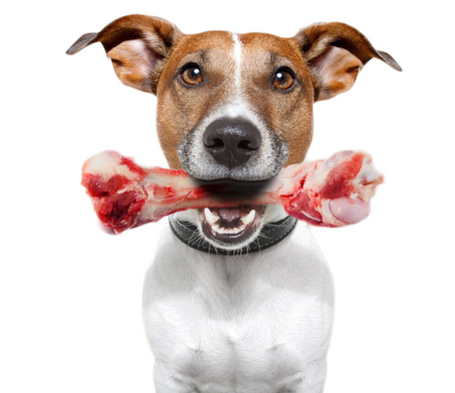
Raw bones on the other hand are safe to feed your dog and help to make up a balanced diet.
Bones are naturally high in calcium and balance the high levels of phosphorous found in the raw meats. Calcium is vital for normal growth and development, for correct mineralisation (strength) of the teeth and bones, and structure of joints. It is vital for muscular contraction in the body, including the heart muscle, and is involved in a wide array of metabolic processes. The calcium in raw bones can be up to 4 times more digestible than most common calcium supplements available.
Raw bones also aid in the cleaning and massaging of the teeth and gums. They hep to prevent many dental problems like Tooth Decay and Gingivitis. The bones also aid to the neutralising of the dogs breath.
Feeding raw bones also aid your dogs digestive system too. It has a cleansing / scouring effect, providing much needed roughage in the diet, and provides bulk for healthy faecal motions that stimulate anal gland emptying.
Picking the right Bone for your Breed
If you have a Chihuahua its not going to make much sense giving it a large Venison neck!
So as a rule I recommend picking a bone which your dog can completely consume either in one sitting or if you are able to remove it from your dog and feed the following day then that’s fine too.
Smaller dogs may be best suited for poultry bones like chicken necks and carcasses.
Moving up the scale of breed size the size of the bone can be increased.
All bones from most animals are safe to feed. Heads, Necks, Shoulders, Spines, Ribs, Trotters…
With Larger breeds you should be careful feeding small bones. I feed Luna (25kg Hungarian Vizsla) some small bones like chicken necks because I know she is a very sensible chewer and she does chew these bones. However some dogs are not so sensible and if they believe they can swallow a chicken leg in one go they may just try. So if you think your dog may not a very sensible eater then do not feed bones which as smaller than their snout. Or for bones that are like ribs, try to feed as a full rack so that they have to bite down and chew.
How much bone to feed?
Bones should make up around 10% of your dogs diet. But this does not mean that it has to be 10% every day. You could feed 50% bone on day but the day before and the following meals after make sure they are boneless. Balance over time is key to a healthy raw diet.
What will happen if I feed too much bone?
It is very unlikely that you are going to feed too much to cause any health problems. There is always the potential of constipation if too much bone is fed but leading up to the constipation you will notice that their stools are white and powdery (almost chalk like).
If your dog does appear to be constipated you can help reverse this by giving them
- Organic apple cider vinegar (ACV).Organic ACV is a bit of a natural wonder drug, in that it can alleviate a wide variety of conditions in both people and pets. It is well known to improve digestion, including relieving constipation. I prefer raw, unfiltered ACV, 1/4 teaspoon per 10 pounds of body weight added to your dog’s food 1-2 times daily.
- Aloe juice (not the topical gel): 1/4 teaspoon per 10 pounds of body weight 1-2 times daily on food.
- Chiropractic, acupuncture/pressure and massage. All three of these natural modalities have been proven to help with chronic constipation in pets.
Puppies
It is essential that your puppy is eating bones to help with the development of healthy bones and teeth. It is advised to feed slightly more bone to puppies between 2-6 months old as this is when their bones are having spurts of growth. The high calcium and glucosamine content will pave the way for their longevity of joints and bones for years to come.
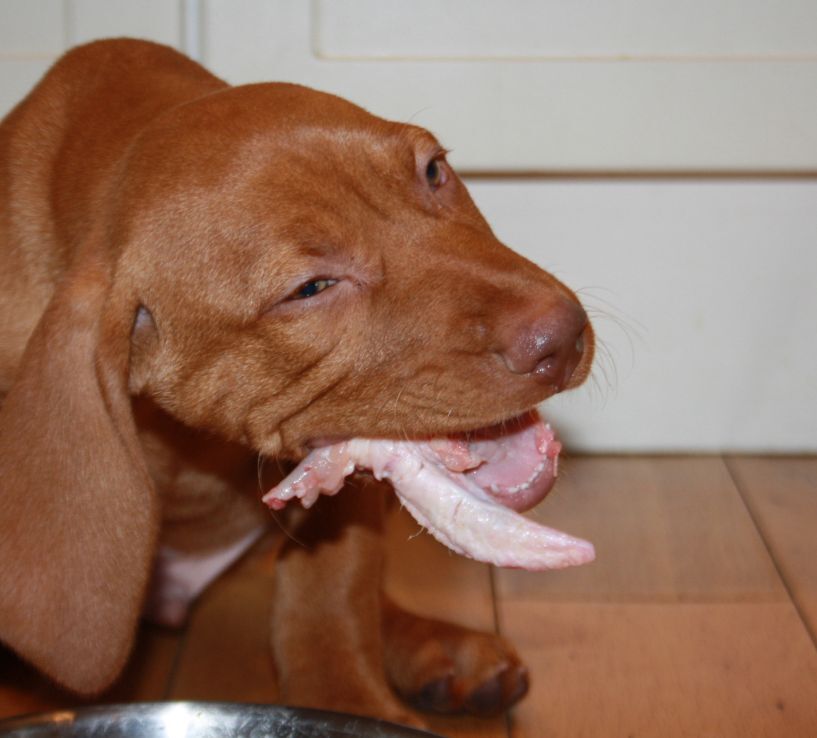
But as above feed bones which are suitable for your puppies breed and size. Hendrix (Hungarian Vizsla) was eating entire chickens at 8 weeks old. Necks, Wings, Backs, Legs and everything else on the bird. At 9 weeks he was tucking into Veal ribs.
If your puppy is not strong enough to tuck into at least chicken wings then you should find a bone in minced meat for them. It really is important that they are eating bone whole or ground they will benefit from the nutrition. The only difference is if ground they will not reap the rewards of tooth cleaning.
Bones to stay away from
Stay away from oddly shaped or cut pieces of bone, like T-bones. These bones are more likely to cause a blockage and can splinter due to trauma sustained from the butchers cutting method.
Weight baring bones especially those of cattle (Knuckle Bones and Marrow Bones) should be fed with caution. These bones are extremely hard due to them strengthening up carrying the huge weight of the cows. I dont recommend these for younger dogs whos teeth are still developing. If your unsure, stay away. Im not a huge fan of cow ribs either. However, Beef Neck bones seem to be slightly softer and less likely to cause tooth fractures. I think these are excellent for teeth cleaning. But as before feed with caution. If your uncertain about your dogs chewing capabilities, stay away.
Best to feed for teeth cleaning
Chicken Carcasses, Turkey Necks, Lamb Ribs, Pigs Trotters, Venison necks, Beef Necks are all favourites of my own dogs and they certainly do the job to keep their teeth clean and fresh. I also feed these bones frozen to my dogs. Feeding frozen allows for longer chewing time which results in longer teeth cleaning and stimulation. I also find when feeding frozen it encourages my dogs to use their front teeth to rip off meat. Something they dont do when defrosted. So a full all around oral clean!
So give your dog a bone today and feed how nature intended!!
Below: Photos of 8 week old Hendrix chowing down on a tasty Raw Chicken Wing.